Wall label, catalogue, and notes
Description
The formal artwork description for Seismic Shifts — for wall labels, catalogues, and program notes.
Wall label
Seismic Shifts · 2026
Ravi Vasavan
Software, microphone, screen; ink on A0 paper.
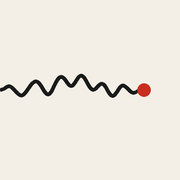
A two-part seismogram. A digital trace listens to the room and draws its acoustic energy as a single, slowly scrolling line. A hand-drawn companion sets that small reading inside a longer arc — 65,000 years of Aboriginal sign languages, including Warlpiri and Yolngu, pockmarked by the seismic moments that have shaped and unmade Deaf life and signed languages.
A room has presence, with or without anyone to hear, see, or feel it. A language has presence, with or without an institution willing to recognise it.
For both Deaf and hearing audiences.
Catalogue entry
Seismic Shifts · 2026
Ravi Vasavan
Software, microphone, screen; ink on A0 paper.
The work is a two-part seismogram. A digital trace listens to the room and draws its acoustic energy as a single, slowly scrolling line — one mic, one line, one slow scroll. A hand-drawn companion piece sets that small reading inside a much longer arc: 65,000 years of Aboriginal sign languages, including Warlpiri, Yolngu, Arandic and others, pockmarked by the seismic moments that have shaped — and unmade — Deaf life and signed languages.
That longer trace runs from the deep continuity of Aboriginal sign languages, through the years before the 1880 Milan Congress, the suppression of signed languages in deaf education that followed, and the eugenics of Alexander Graham Bell and his contemporaries. Across that arc, Deaf existence and signed languages plummet below the historical baseline and have not, even now, recovered.
The claim is that what is recorded is real: a room has presence, with or without anyone to hear, see, or feel it; a language has presence, with or without an institution willing to recognise it. The piece is for both Deaf and hearing audiences.
No audio is captured, stored, or recoverable. Only one number per second — the room's acoustic shape over time — drives the digital trace. It is equivalent to a barometer recording air pressure.
Notes on the diptych
- Scale. The digital trace covers minutes to days; the drawing covers tens of thousands of years. The cream and ink palette is shared.
- The orange chip. In the digital piece, a quiet orange marks the active 15-minute window. On the drawing, the same orange bands the eugenics era — 1880 to 1945. Same visual language, different time scales.
- The red mark. In the digital piece, a single red dot signals session start — the work coming into the room. On the drawing, the same red marks 1880 — the moment that broke the historical line.
- What baseline means. Baseline on the long arc is the deep historical norm: 65,000 years of continuous signed-language presence in human community. Recognition by Western institutions is incidental to that baseline, not the source of it.
The long arc — what it shows
The vertical axis is presence. Above the baseline: Deaf life and signed languages held as a celebrated, transmitted feature of human community. Below: suppressed. The baseline itself is the deep historical norm — 65,000 years of continuous signed-language presence on this continent and others, long before any institution thought to record it.
The trace runs at-baseline through the deep past. It rises modestly through the Western institutional period of the 18th and 19th centuries. It plummets at the 1880 Milan Congress. It deepens through the eugenics era of Alexander Graham Bell and his contemporaries — the 1907 Indiana sterilisation law, Australian assimilation policies, the 1933 Nazi sterilisation law and Aktion T4. It begins climbing again in 1960 with William Stokoe's demonstration that ASL is a natural language; it continues through the naming of Auslan, Deaf President Now, the recognition of NZSL, and the ICED's 2010 apology for the Milan resolutions. In 2026 it is rising. It is not yet at the line it left.
The right ten per cent of the page is intentionally blank. The trace has not been drawn there yet.
For the visualisation itself — pannable, zoomable, with adjustable detail — see The Arc.
Timeline
- c. 65,000 BP onwards — Aboriginal Australian presence on the continent. Aboriginal sign languages — Warlpiri, Yolngu, Arandic, Pitjantjatjara, Ngada, Western Desert and others — used in mourning rituals, hunting, ceremony, and across language groups.
- Deep past, parallel traditions — Plains Indian Sign Language (Hand Talk) as a lingua franca across many North American Plains nations.
- c. 1550 — Pedro Ponce de León: first documented European deaf education.
- 1620 — Juan Pablo Bonet, Reducción de las letras y arte para enseñar a hablar a los mudos.
- 1755 — Abbé de l'Épée founds the first free school for the deaf in Paris; LSF as language of instruction.
- 1760 — Thomas Braidwood opens the first British school for the deaf in Edinburgh.
- 1817 — American School for the Deaf founded in Hartford by Gallaudet and Clerc; ASL emerges.
- 1864 — Gallaudet College chartered in Washington, DC.
- 1880 — Milan Congress. 164 hearing delegates vote to ban sign languages from deaf education in favour of oralism.
- 1883 — Alexander Graham Bell, Memoir Upon the Formation of a Deaf Variety of the Human Race; argues against deaf-deaf marriage, against deaf residential schools, against sign languages.
- 1907 — Indiana enacts the first US compulsory sterilisation law; deaf people among those targeted.
- Late 19th – mid 20th century — Australian assimilation policies and removal practices suppress Aboriginal languages, including Aboriginal sign systems.
- 1933 — Nazi Germany's Law for the Prevention of Hereditarily Diseased Offspring. ~17,000 deaf people sterilised.
- 1939 – 1945 — Aktion T4 and related programs murder thousands of deaf and disabled people.
- 1960 — William Stokoe, Sign Language Structure: ASL demonstrated as a fully grammatical natural language.
- 1975 — Auslan named and described as a distinct language.
- 1988 — Deaf President Now installs I. King Jordan as first deaf president of Gallaudet University.
- 1990 — Americans with Disabilities Act (ADA) signed into US law. Mandates access — interpreting services, captioning, telecommunications relay — and prohibits discrimination on the basis of disability.
- 1995 — Auslan recognised in Australia's national language policy.
- 2003 — NZSL recognised as an official language of New Zealand.
- 2010 — International Congress on Education of the Deaf issues Statement of Principle and Accord for the Future, formally rejecting and apologising for the 1880 resolutions.
- 2022 — UK Parliament passes the British Sign Language Act, recognising BSL as a language of England, Wales and Scotland.
- 2020s — Ongoing recognition and documentation of Aboriginal sign language traditions.
- 2026 — The trace is rising. It is not yet at the line it left.